How to Prevent Mould in Your Wardrobe in Singapore's Humidity
Why wardrobes get mouldy in Singapore, how to stop it, and what to look for in materials and design so your clothes stay fresh year-round.
By The Wardrobe SG Team · Updated 6 October 2026
The short answer
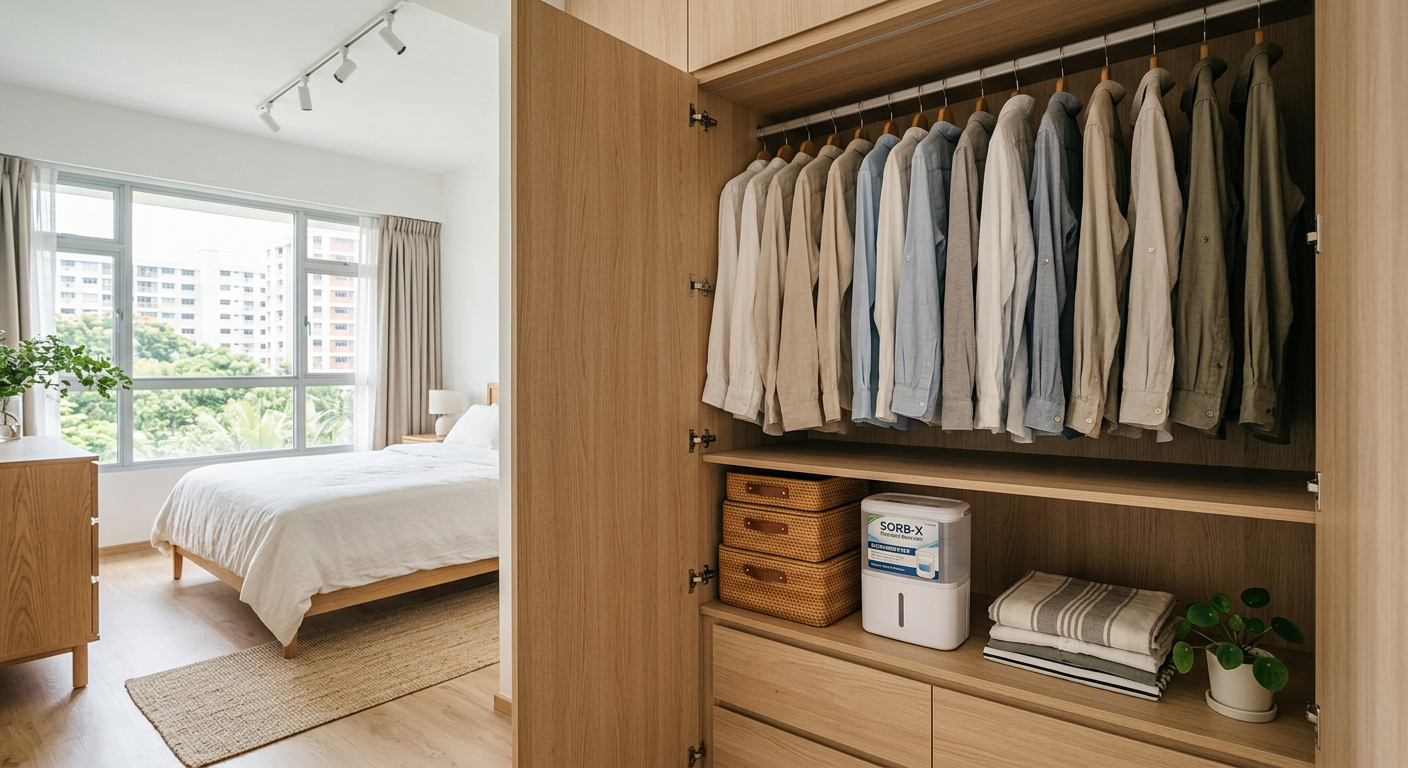
Wardrobe mould in Singapore is caused by trapped humidity, not dirt. To prevent it, keep air moving (avoid over-packing and open the doors regularly), use moisture absorbers or a small dehumidifier, never store damp or freshly ironed clothes, and keep the wardrobe off a cold or damp external wall. Moisture-resistant boards and sealed edges reduce the risk at the build stage.
Key takeaways
- Singapore's average relative humidity sits around 80%, which is ideal for mould growth in enclosed spaces.
- Airflow is the biggest factor: over-packed wardrobes trap moisture.
- Moisture absorbers and dehumidifiers work best combined with regular airing.
- Never put away clothes that are damp, sweaty or still warm from ironing.
- At the build stage, moisture-resistant boards and fully sealed edge banding make a real difference.
Few things are more frustrating than opening your wardrobe to a musty smell or white spots on a leather bag. In Singapore this is extremely common, and it's almost always a humidity problem rather than a cleanliness one. The good news: it's very preventable.
Why wardrobes get mouldy in Singapore
Mould needs moisture, warmth and still air. A closed wardrobe in a tropical climate offers all three. Humidity rises further during the monsoon seasons and in rooms where air-conditioning is only used at night, because moisture condenses as the room warms back up during the day.
Daily habits that stop mould
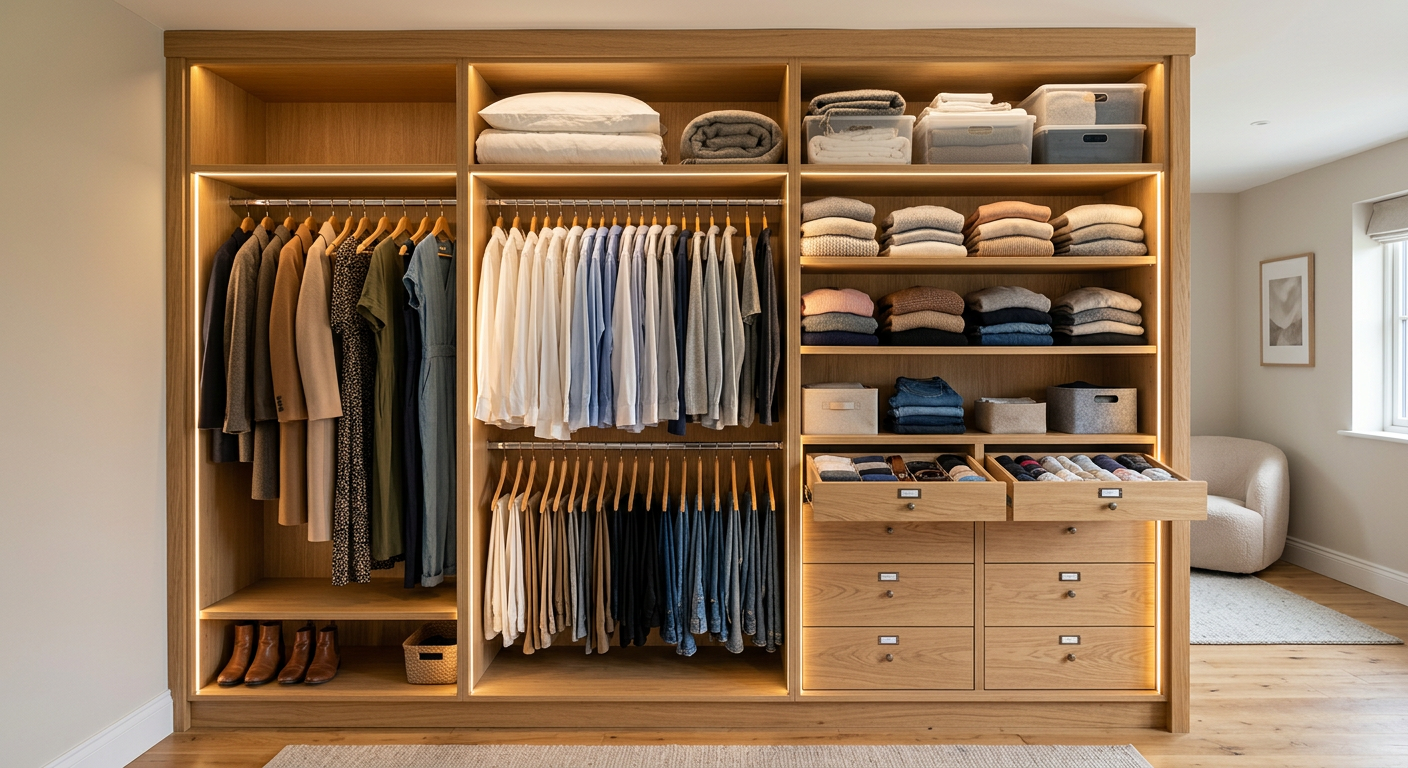
- Leave a little space between hangers so air can circulate.
- Open the wardrobe doors for 10–15 minutes a few times a week, especially on dry days.
- Let clothes cool and dry completely after ironing or washing before putting them away.
- Don't store worn, sweaty clothes back in the wardrobe; air them out first.
- Store leather bags and shoes in breathable cotton dust bags, never plastic.
Moisture absorbers vs dehumidifiers
| Option | Best for | Notes |
|---|---|---|
| Disposable moisture absorber boxes | Every wardrobe | Cheap and easy. Replace when the tub fills with water, often every 3–6 weeks in Singapore. |
| Rechargeable silica packs | Drawers and bags | Reusable; dry them out in the sun or oven. |
| Room dehumidifier | Rooms prone to mustiness | Most effective overall; run it with doors open. |
| Cedar or charcoal blocks | Smell control | Help with odour, but don't remove much moisture alone. |
What helps at the build stage
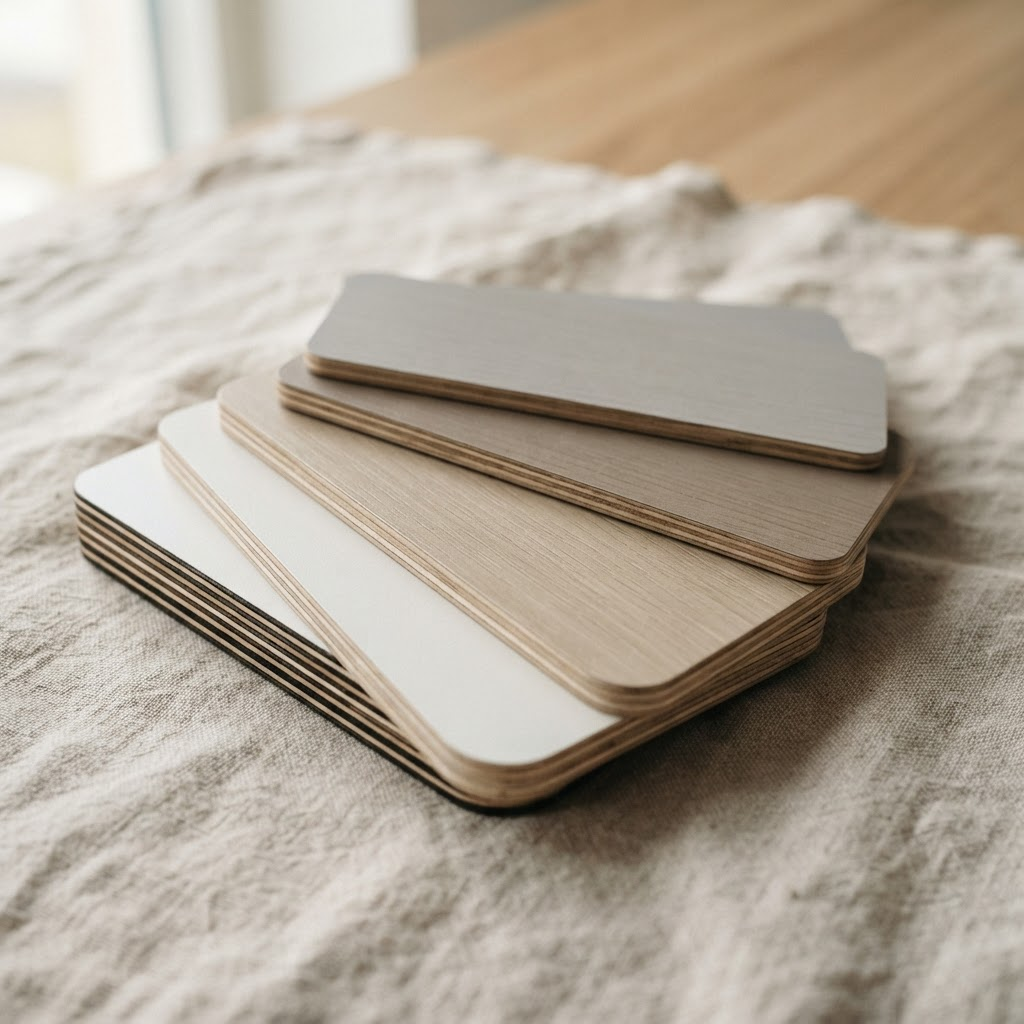
- Moisture-resistant carcass boards rather than standard particleboard.
- Edge banding sealed on every exposed edge so moisture can't seep into the board core.
- A raised plinth (we use 100mm) that keeps the base off mopped floors.
- A small gap behind the wardrobe on external walls that get afternoon sun or rain.
- Ventilated or louvred panels for rooms that stay closed up most of the day.
Frequently asked questions
- Why does my wardrobe smell musty in Singapore?
- A musty smell means moisture is trapped inside. It's caused by Singapore's high humidity combined with poor airflow, over-packing or putting away damp clothes. Airing the wardrobe and adding moisture absorbers usually fixes it.
- How often should I change wardrobe moisture absorbers?
- In Singapore, disposable absorber tubs often fill within 3–6 weeks, faster during the monsoon season. Replace them once the tub is mostly water.
- Does a built-in wardrobe get more mould than a freestanding one?
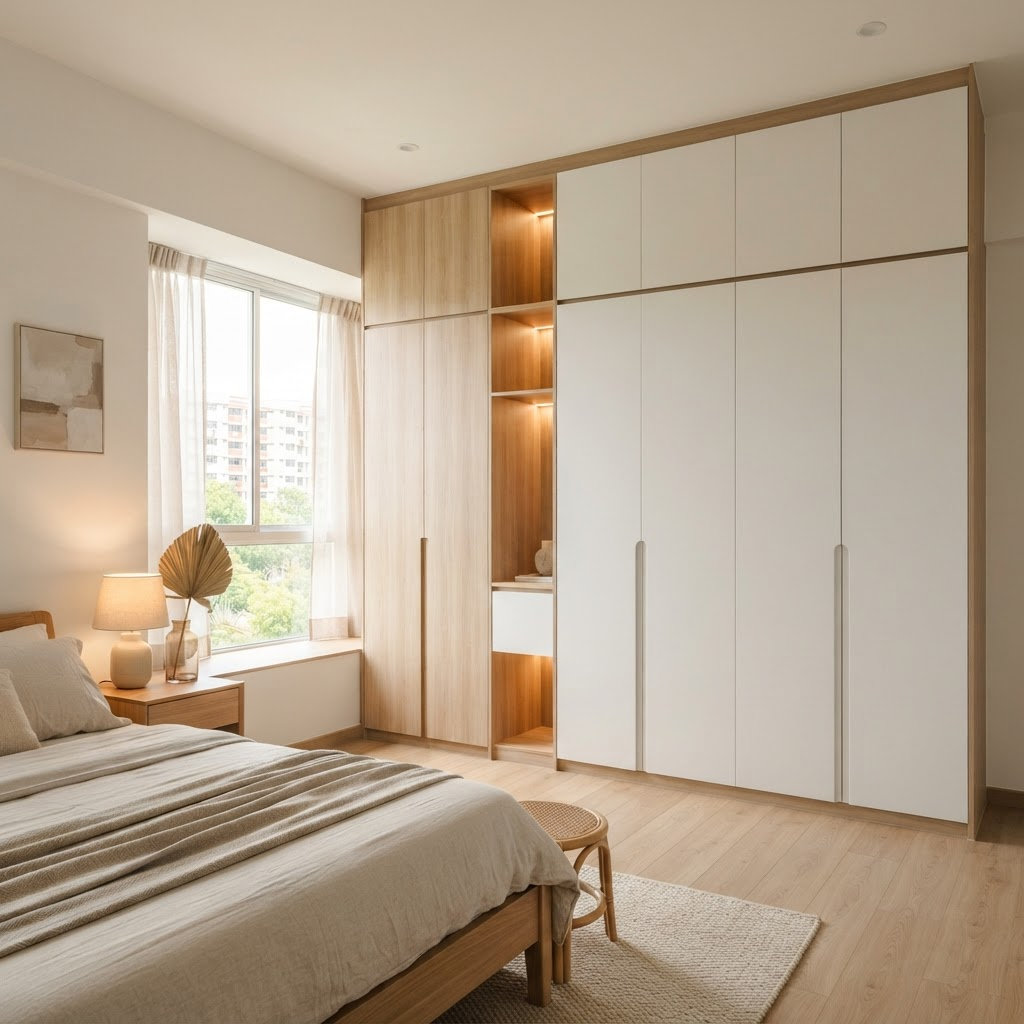
- Not if it's built well. A built-in with moisture-resistant boards, sealed edges and a raised plinth handles humidity better than most flat-pack units, which often use thinner, unsealed particleboard.
- Can I use a dehumidifier inside a wardrobe?
- Small wardrobe dehumidifiers exist, but a room dehumidifier run with the wardrobe doors open is usually more effective for Singapore homes.
Ready to plan your wardrobe?
Get a free, no-obligation quote. We measure on-site, custom-build to your space, and handle delivery and installation.