How to Plan Your Wardrobe's Internal Layout: Shelves, Drawers & Hanging Space
A practical guide to planning the inside of a wardrobe: hanging heights, shelf spacing, drawer sizes and how to match the layout to what you actually own.
By The Wardrobe SG Team · Updated 6 October 2026
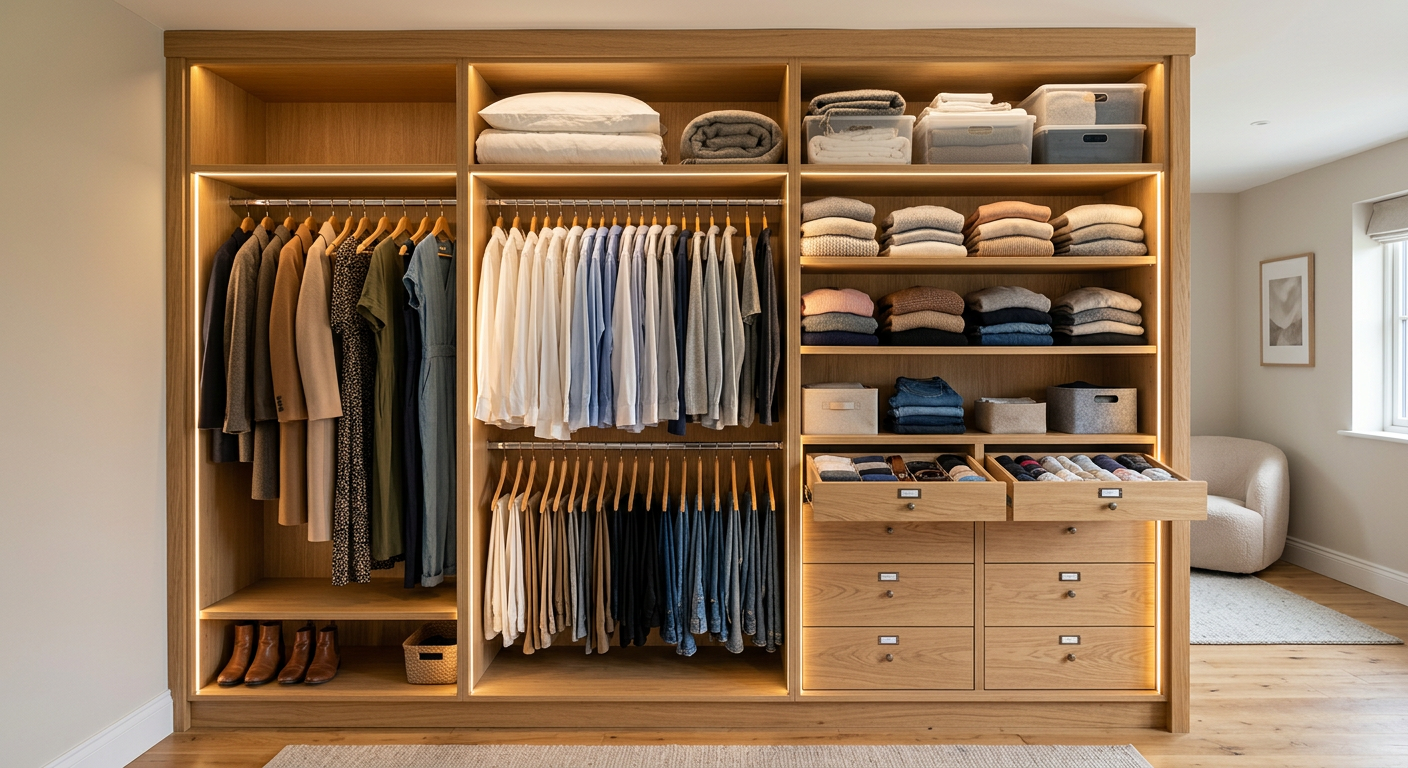
The short answer
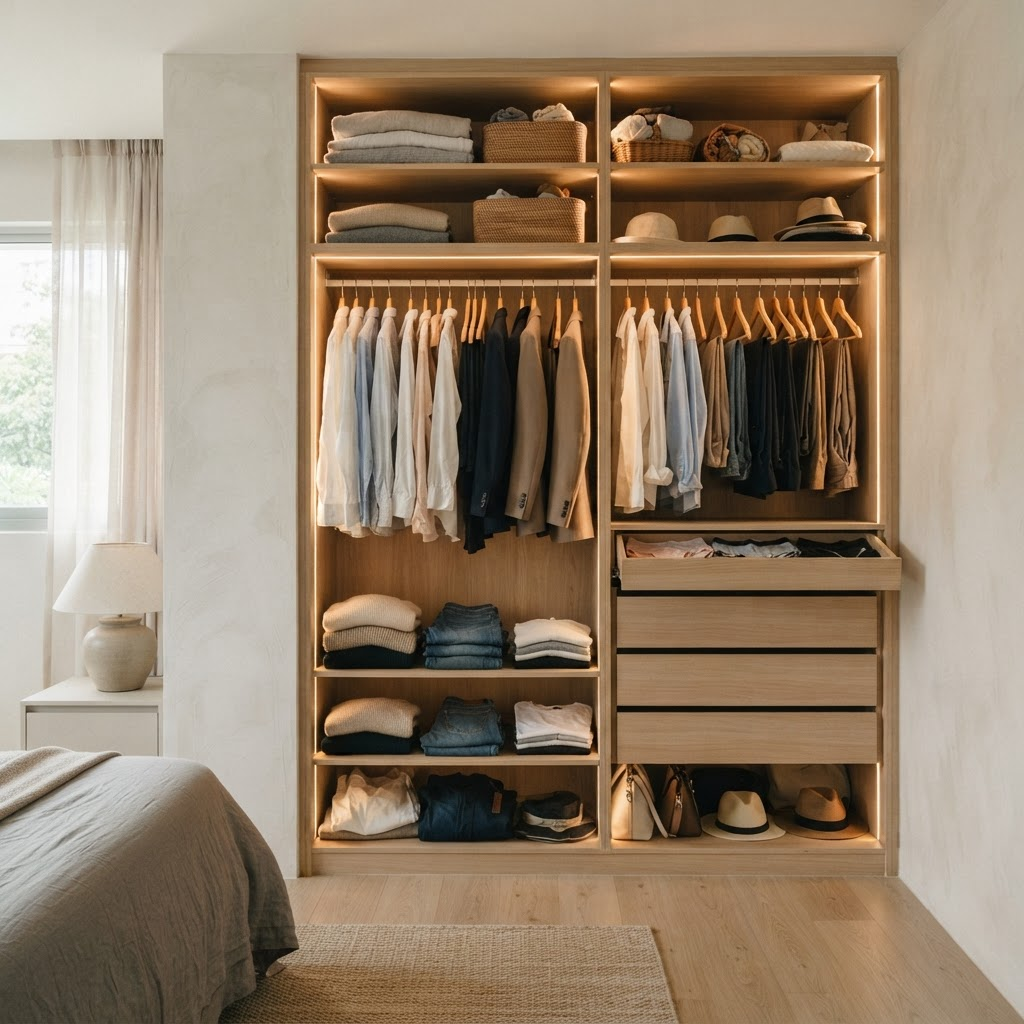
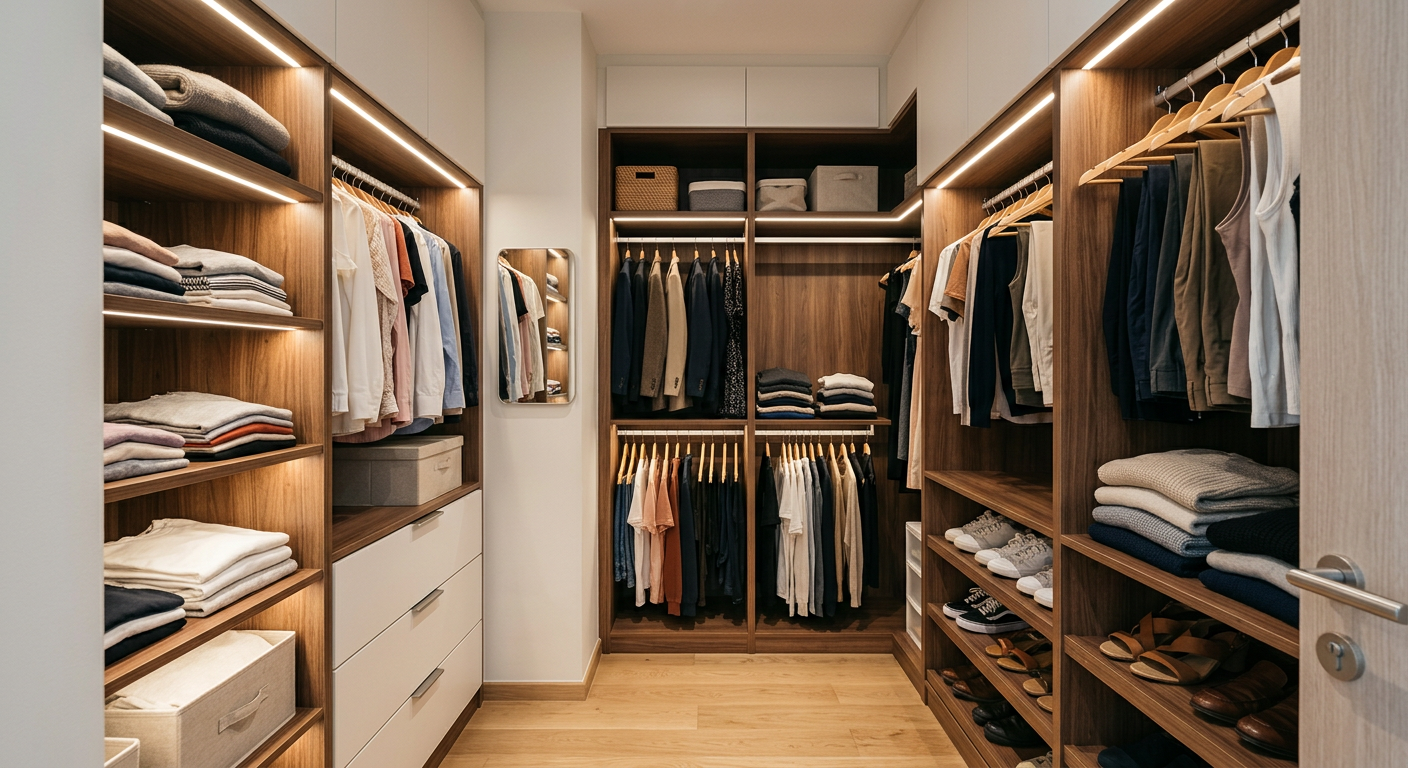
Plan a wardrobe's inside around what you own. As a guide, allow about 1500–1700mm of height for long-hang (dresses, coats), about 900–1000mm per rail for double-hang (shirts, folded trousers), 300–350mm between shelves for folded clothes, and 150–250mm deep drawers for underwear and accessories. Keep a full-width top compartment for luggage and seasonal items.
Key takeaways
- Count your clothes by type first: long-hang, short-hang, folded, drawers, shoes and bags.
- Double-hang rails roughly double hanging space for shirts and tops.
- Shelves for folded clothes work best at 300–350mm apart.
- Put drawers at waist height so you can see into them without bending.
- Adjustable shelves keep the layout useful as your needs change.
Two wardrobes of the same size can hold very different amounts depending on the layout inside. A good internal layout means less mess, easier mornings and no wasted space.
Step 1: Audit what you own
Before choosing a layout, roughly count your items by type. Most Singapore wardrobes need far more short-hang and folded space than long-hang, because of the climate and work wear.
Step 2: Use these typical dimensions
| Zone | Typical size | Use for |
|---|---|---|
| Long-hang | 1500–1700mm high | Dresses, coats, long trousers |
| Double-hang (each rail) | 900–1000mm high | Shirts, blouses, folded trousers |
| Shelves | 300–350mm apart | Folded T-shirts, jeans, knitwear |
| Drawers | 150–250mm deep | Underwear, socks, accessories |
| Top compartment | 450mm high, full width | Luggage, bedding, seasonal items |
Step 3: Divide it into sections
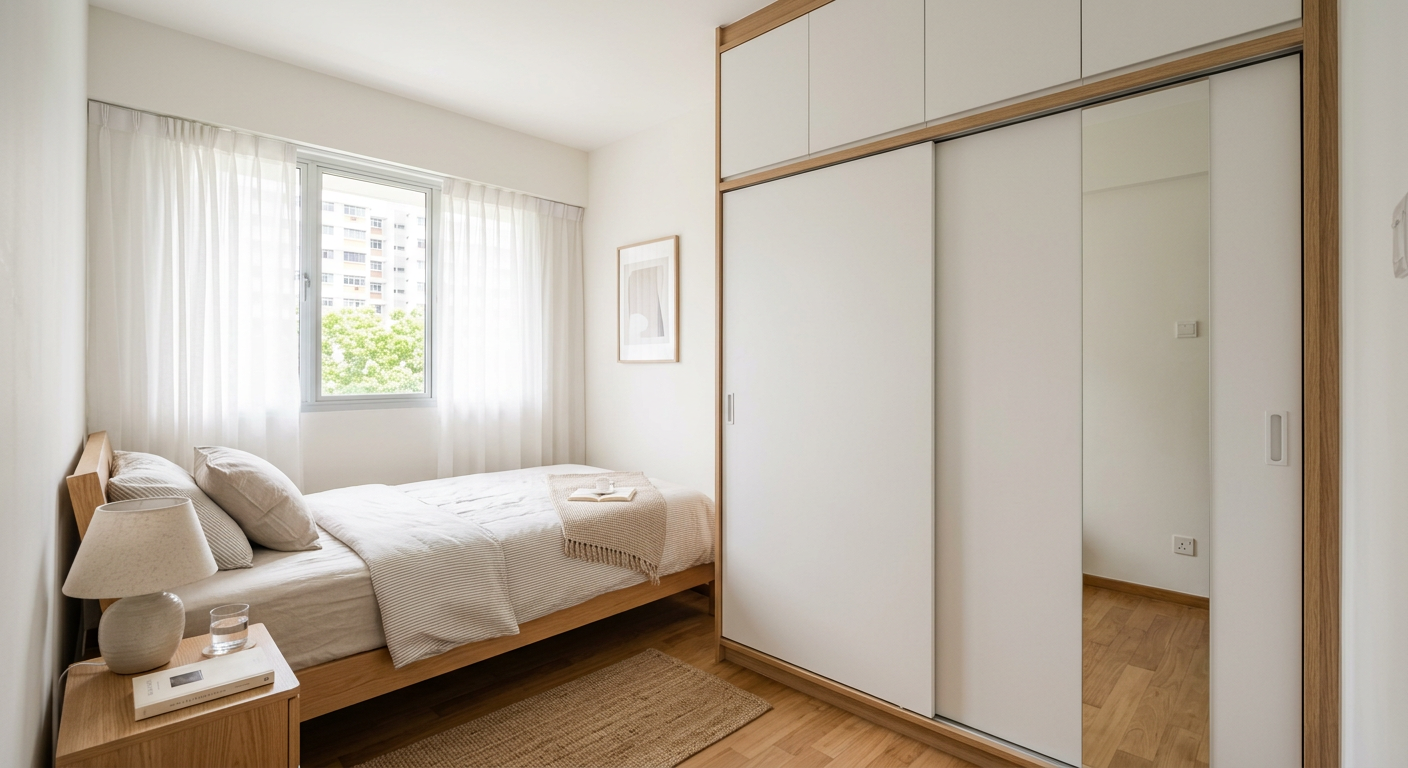
With hinged doors, sections usually follow the 450mm door panels. With sliding doors, sections follow the roughly 900mm panels, so place the items you use most behind the door you'll open most often.
Fittings worth paying for
- Soft-close drawers with full-extension runners.
- Pull-out trouser racks or tie and belt trays.
- LED strip lighting triggered by door sensors.
- A lockable drawer for passports and valuables.
- A pull-down hanging rail if you use the upper space for clothes.
Frequently asked questions
- How much hanging space do I need in a wardrobe?
- As a rough guide, allow around 1–1.5m of rail width per person for everyday clothing. Using double-hang rails for shirts and tops effectively doubles that capacity.
- What height should a wardrobe hanging rail be?
- A single long-hang rail usually sits around 1600–1800mm from the base. For double-hang, the upper rail is around 1900–2000mm and the lower around 1000mm.
- Are drawers better than shelves in a wardrobe?
- Drawers keep small items tidy and dust-free, while shelves are cheaper and better for folded knitwear and jeans. Most layouts mix both.
- How far apart should wardrobe shelves be?
- Around 300–350mm works well for folded clothes. Go wider (400mm+) for bags or boxes.
Ready to plan your wardrobe?
Get a free, no-obligation quote. We measure on-site, custom-build to your space, and handle delivery and installation.